
Introduction
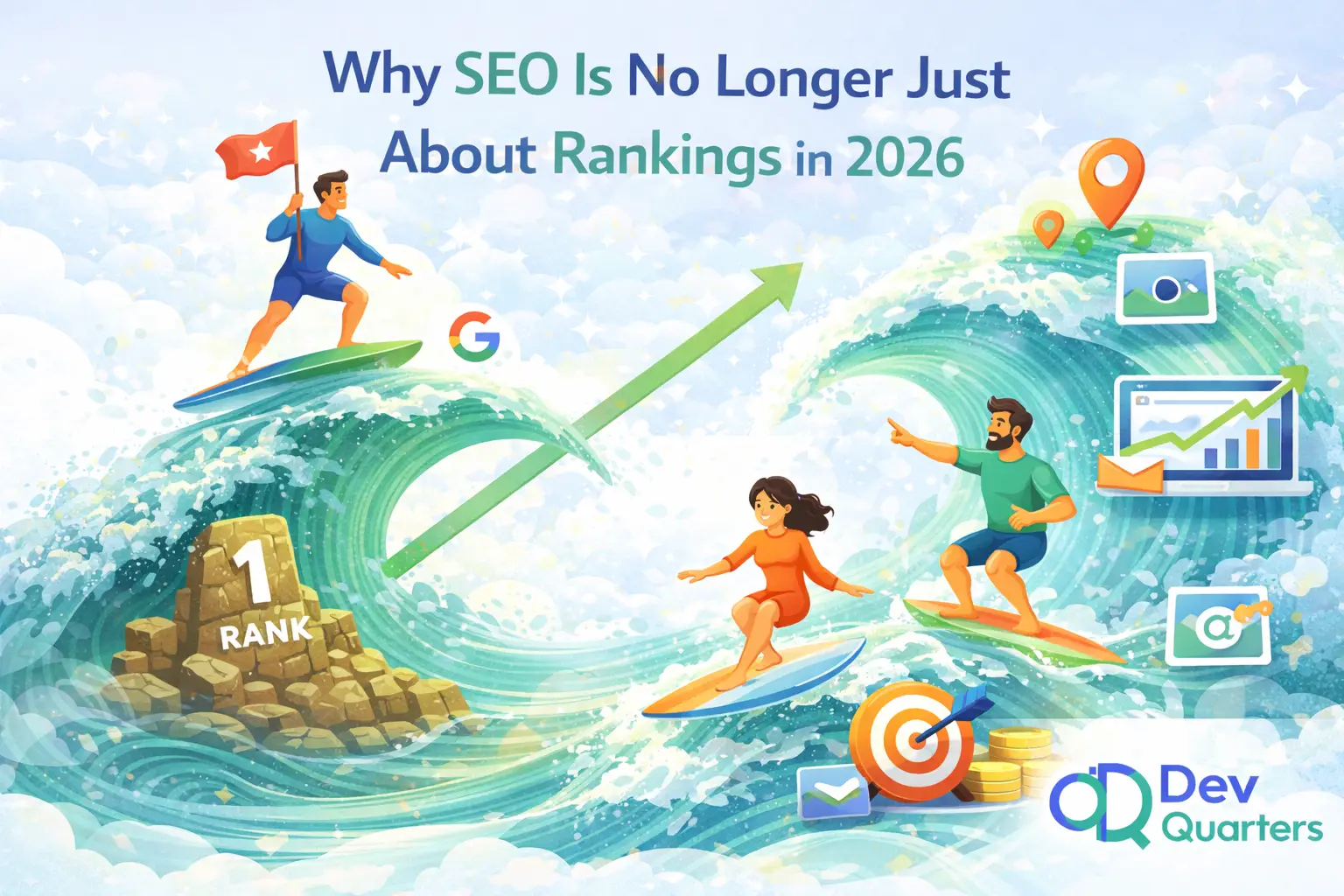
Search has changed—and fast. AI-powered summaries, voice queries, zero-click results, and smarter algorithms have completely reshaped how users interact with search engines. In this environment, an SEO strategy in 2026 can’t rely on keyword positions alone. Visibility without engagement, and traffic without conversions, no longer delivers meaningful business results. Users expect instant answers, seamless experiences, and relevant content that aligns with their intent. At Dev Quarters Innovation, we’ve observed that companies adapting their SEO strategy in 2026 to focus on intent and outcomes consistently outperform those stuck chasing rankings alone.
Why Traditional SEO Thinking Is Breaking Down
For years, SEO success was measured by rankings. If you reached the top three positions, you won. But that formula no longer guarantees growth.
Here’s why ranking-first strategies are failing:
- High rankings with low engagement
- Traffic that doesn’t match buyer intent
- Visitors who bounce within seconds
- Low-quality leads with no conversion path
Traffic volume without alignment to business objectives is vanity. Companies now realise that impressions and clicks mean little if users don’t take action.
Search engines have also evolved. Algorithms analyse behaviour signals—dwell time, click-through rate, engagement depth—rather than just keywords. That shift has redefined SEO strategy in 2026, forcing marketers to focus on value instead of visibility alone.
SEO Strategy in 2026 Explained
At its core, SEO strategy in 2026 prioritises user intent, experience quality, and measurable outcomes. It blends technical optimisation with content relevance and conversion thinking.
Unlike traditional models that revolved around keyword density and backlinks alone, SEO strategy in 2026 integrates:
- Intent-driven content planning
- Behavioral analytics
- UX optimization
- Conversion tracking
The goal is not just to rank—but to attract the right audience and guide them toward meaningful actions.
This approach acknowledges a critical truth: search engines reward user satisfaction. When content answers questions clearly and supports decision-making, rankings follow naturally.
Rankings Without Intent Don’t Convert
High rankings can be misleading. A page might appear at the top of search results but fail to convert because it doesn’t align with what users truly need.
This is where SEO beyond rankings becomes essential. If someone searching for “best CRM software” lands on a generic informational blog, they are unlikely to convert. The intent is commercial comparison, not general education.
Mismatched intent results in:
- High bounce rates
- Low session duration
- Minimal engagement
- Poor lead quality
SEO strategy in 2026 focuses on filtering traffic, not just increasing it. Attracting fewer but more qualified users often drives stronger business outcomes.
Search Intent Is the Real Ranking Signal
Algorithms have become increasingly sophisticated in understanding intent. Informational, navigational, transactional, and commercial queries each demand different content structures.
Effective search intent optimisation means aligning content format, tone, and depth with the user’s objective.
For example:
- Informational queries need comprehensive explanations.
- Commercial queries require comparisons and benefits.
- Transactional queries demand clear calls to action.
Keyword stuffing no longer works. Context and clarity matter more than repetition. SEO strategy in 2026 recognises that relevance beats density every time.
When content genuinely satisfies intent, engagement signals improve—and so do rankings.
SEO and User Experience Are Now Linked
One of the most important shifts is the growing connection between SEO and user experience. Search engines now evaluate performance factors such as page speed, mobile responsiveness, navigation clarity, and content structure.
A slow-loading page or confusing layout can undermine even the most optimised content.
Key UX elements influencing SEO include:
- Fast load times
- Mobile-friendly layouts
- Clear internal linking
- Structured headings
- Readable typography
The 2026 SEO strategy integrates technical SEO with UX design to create cohesive experiences. It’s no longer enough to attract users; you must retain and guide them.
Content That Ranks vs Content That Drives Action
There is a significant difference between content that appears in search results and content that influences decisions.
Conversion-focused SEO ensures that pages not only attract visitors but also guide them toward meaningful next steps. That might include downloading a resource, requesting a consultation, or making a purchase.
Conversion-driven content includes:
- Clear value propositions
- Social proof
- FAQs addressing objections
- Strategic calls to action
In 2026, SEO strategy treats content as part of the sales journey. Visibility initiates the interaction, but persuasive structure drives the outcome.
How the Future of SEO Is Shaping Marketing Decisions
The future of SEO is deeply intertwined with AI advancements and evolving user behaviour.
AI-generated summaries often answer queries directly within search results, reducing clicks. This means brands must establish authority strong enough to be cited in those summaries.
Other emerging shifts include:
- Zero-click searches
- Voice search optimization
- Increased emphasis on brand trust
- Entity-based search understanding
SEO strategy in 2026 must account for these realities. Authority signals, expert-driven content, and strong brand presence now influence search visibility as much as technical optimisation.
Companies that treat SEO as an integrated marketing function—rather than a siloed tactic—are better positioned to adapt.
Common SEO Mistakes Businesses Still Make
Despite clear industry changes, many organisations cling to outdated tactics.
Over-Optimizing for Keywords
Excessive keyword insertion damages readability and trust.
Ignoring User Experience
Technical performance and design clarity are often overlooked.
Chasing Traffic Instead of Leads
High visitor numbers without conversions create misleading success metrics.
Relying on Outdated Tactics
Manipulative link-building strategies and thin content no longer deliver sustainable results.
SEO strategy in 2026 demands a holistic perspective that balances optimisation with user value.
Why SEO Must Align With Business Goals
Modern SEO efforts should support broader marketing and revenue objectives. Rankings alone cannot justify investment unless they contribute to measurable growth.
Aligning SEO with business strategy involves:
- Defining clear conversion paths
- Tracking qualified leads
- Measuring engagement quality
- Continuously optimizing performance
SEO strategy in 2026 bridges the gap between visibility and profitability. It shifts the conversation from “Where do we rank?” to “What impact are we generating?”
Conclusion
The era of ranking-first SEO is over. SEO strategy in 2026 demands a balanced focus on visibility, intent alignment, user experience, and conversion performance. Traffic alone is no longer a reliable indicator of success.
By embracing SEO strategy in 2026 as a holistic growth framework—rather than a keyword game—businesses can create sustainable, measurable results. At Dev Quarters Innovation, the consistent observation is clear: companies that integrate intent, experience, and conversion into their SEO efforts build stronger digital foundations.
If your current strategy prioritises rankings over outcomes, it may be time to rethink how SEO supports your broader business objectives. Smarter optimisation begins with understanding what truly drives impact.