

Introduction
Choosing the Best Programming Languages for App Development in 2026 is no longer just a technical decision—it’s a strategic one. Apps today must handle AI integration, real-time performance, seamless user experiences, and compatibility across multiple platforms. Users expect speed, security, and personalisation by default. Businesses that ignore these expectations risk falling behind.
Modern development environments demand smarter language selection based on scalability, ecosystem maturity, and long-term maintainability. Teams like DevQuarters evaluate language decisions not only by popularity but by how well they support product growth and performance objectives. Let’s examine how app development has evolved and which languages are leading in 2026.
How App Development Has Changed in 2026
App development in 2026 looks very different compared to five years ago.
First, performance expectations are higher. Users expect apps to load instantly and function without lag—even with advanced animations and real-time features.
Second, AI integration has become mainstream. Recommendation engines, chatbots, predictive search, and automation tools are now embedded into everyday applications. This shift impacts which mobile app development languages are most relevant.
Third, security standards are stricter. Data protection regulations and user privacy expectations require secure coding practices and robust backend architecture.
Fourth, scalability matters more than ever. Applications must handle user growth without requiring complete rebuilds.
All these factors influence the selection of the Best Programming Languages for App Development in 2026.
Best Programming Languages for App Development in 2026
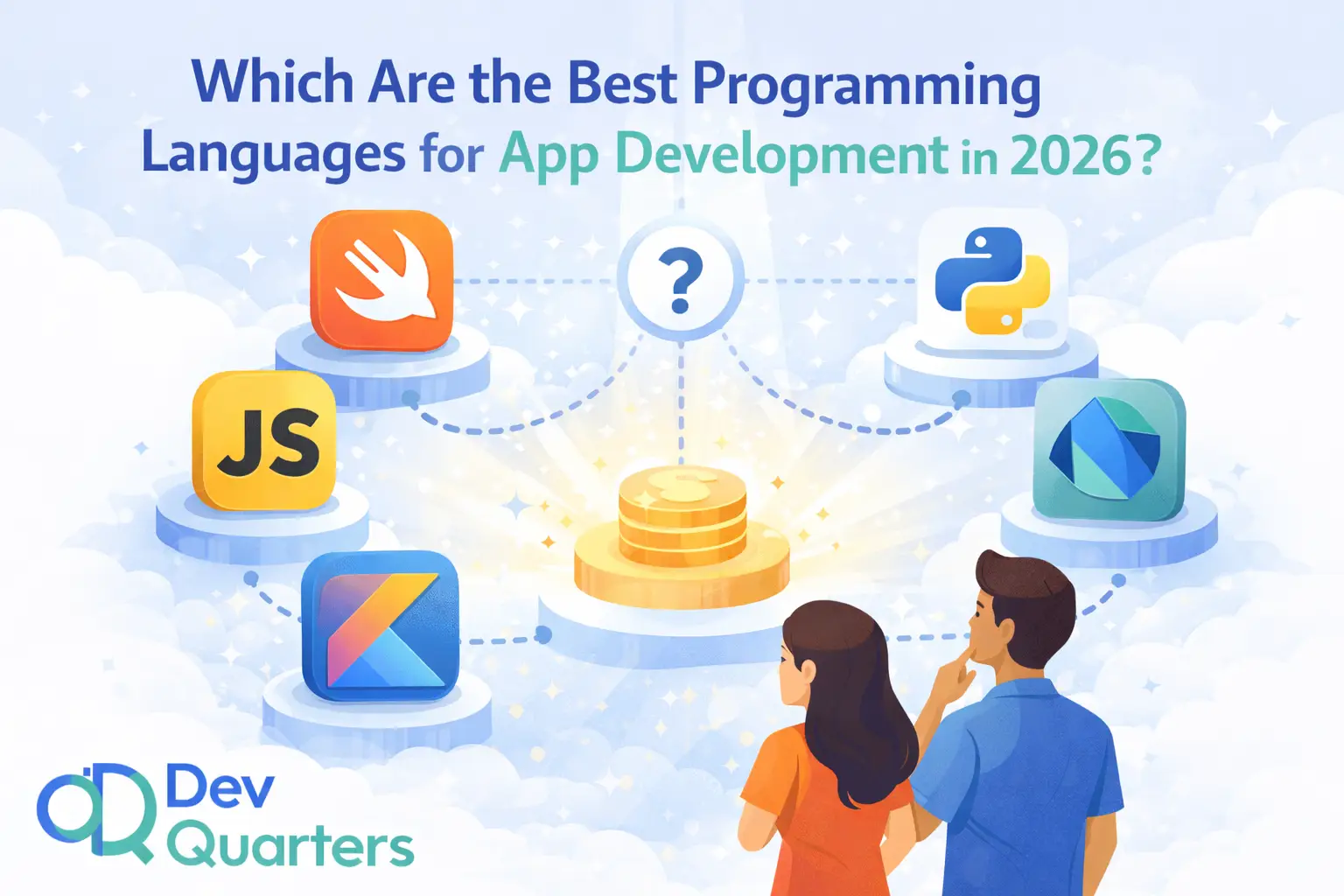
There isn’t a single winner. The Best Programming Languages for App Development in 2026 depend on platform, performance goals, and long-term strategy. Below are the top contenders dominating the industry.
Kotlin for Android Development
Kotlin has firmly established itself as the preferred choice for Android.
As one of the leading Android app development languages, Kotlin offers:
- Concise syntax
- Strong type safety
- Reduced boilerplate code
- Full compatibility with Java
- Official support from Google
Kotlin improves development speed while maintaining high performance. It supports modern architectural patterns and integrates seamlessly with Android Studio.
For businesses targeting Android users specifically, Kotlin remains one of the Best Programming Languages for App Development in 2026 due to its reliability and ecosystem strength.
Swift for iOS Development
Swift continues to dominate Apple’s ecosystem.
Among iOS app development languages, Swift stands out for:
- High execution speed
- Memory safety
- Clean syntax
- Seamless integration with Apple frameworks
Swift enables developers to create smooth, high-performance apps optimised for iPhones, iPads, and other Apple devices.
For businesses focused on premium user experience within Apple’s ecosystem, Swift is unquestionably one of the Best Programming Languages for App Development in 2026.
JavaScript for Cross-Platform Apps
JavaScript remains a powerful force, especially in cross-platform app development.
Frameworks like React Native allow developers to build applications for both Android and iOS using a single codebase. This significantly reduces development time and maintenance complexity.
Benefits include:
- Faster deployment cycles
- Code reusability
- Large developer community
- Strong integration with web platforms
JavaScript’s flexibility ensures it remains among the Best Programming Languages for App Development in 2026, particularly for startups seeking efficiency without sacrificing user experience.
Dart for Flutter Development
Dart, powered by Flutter, has seen rapid adoption.
Flutter enables developers to build visually consistent applications across platforms with a single codebase. Its rendering engine ensures near-native performance.
Advantages include:
- Hot reload for faster iteration
- Consistent UI across devices
- Strong community growth
- Reduced long-term maintenance
For businesses prioritising unified branding and faster development cycles, Dart supports some of the most efficient mobile app development languages and strategies in the market today.
Python for AI-Driven and Backend Apps
While Python isn’t typically used for front-end mobile interfaces, it plays a critical role in backend systems and AI integration.
Python is essential for:
- Machine learning models
- Data analysis
- Automation
- AI-based recommendation systems
As AI becomes central to app functionality, Python stands out among future programming languages shaping intelligent applications.
When paired with mobile front-end technologies, Python strengthens backend infrastructure, making it indirectly relevant to the Best Programming Languages for App Development in 2026 conversation.
Native vs Cross-Platform Development in 2026
Choosing between native and cross-platform development depends on business goals.
Native Development
- Maximum performance
- Platform-specific optimisation
- Best for complex or hardware-intensive apps
Cross-Platform Development
- Faster development
- Lower initial cost
- Easier maintenance
- Broader market reach
In many cases, cross-platform app development offers a balanced approach—especially for startups validating ideas quickly. However, performance-heavy applications may still benefit from native approaches using leading Android app development languages or iOS app development languages.
The key is aligning technical choice with product vision.
Factors to Consider When Choosing a Programming Language
Selecting from the Best Programming Languages for App Development in 2026 requires thoughtful evaluation.
Consider:
- Project Goals – Is the app feature-heavy or content-focused?
- Target Audience – Android, iOS, or both?
- Budget – Is long-term maintenance a priority?
- Performance Needs – Will the app handle high user loads?
- Scalability – Can the architecture grow with demand?
- AI Requirements – Does the app require intelligent automation?
The right language depends on business objectives, not trends alone.
Common Mistakes Businesses Make When Choosing Languages
Even experienced teams make avoidable errors.
Following Trends Blindly
Just because a language is popular doesn’t mean it suits your project.
Ignoring Maintenance Costs
Some technologies may appear affordable initially, but require expensive long-term updates.
Underestimating Talent Availability
A language with limited developer availability can slow growth and increase hiring costs.
Strategic evaluation prevents costly rebuilding later.
Conclusion
The Best Programming Languages for App Development in 2026 are those that align with performance demands, scalability goals, AI readiness, and platform strategy. Whether choosing Kotlin, Swift, JavaScript, Dart, or Python, the decision directly impacts user experience, development efficiency, and long-term cost structure.
Technology choices should support business growth—not complicate it.
Teams like DevQuarters approach language selection with architecture, scalability, and future expansion in mind rather than short-term convenience. If you’re planning a new application or upgrading an existing one, evaluating the right programming language early can save significant time and resources down the line.
Smart foundations build scalable products.