

Introduction
User expectations are evolving faster than ever. In 2026, people demand speed, clarity, accessibility, and personalised digital experiences—all within seconds of landing on a website. Brands that fail to adapt risk losing attention before they even have a chance to communicate value. That’s why understanding modern web design trends for 2026 is no longer optional; it’s essential for staying competitive. Businesses that prioritise performance and user-centric design consistently outperform those focused solely on aesthetics. At DevQuarters, we’ve seen how aligning with modern web design trends for 2026 helps brands strengthen credibility while improving measurable results.
Why Web Design Trends Matter in 2026
Web design is not just about appearance—it directly influences behaviour, trust, and conversions. Today’s users scan pages quickly, make snap judgments about credibility, and expect seamless navigation across devices.
The latest website design trends 2026 reflect changing user habits. Visitors expect intuitive layouts, fast-loading pages, and frictionless experiences. A slow or cluttered website increases bounce rates and reduces engagement.
Beyond functionality, design also shapes brand perception. Clean interfaces communicate professionalism. Consistent layouts build trust. Thoughtful structure encourages action. The future of web design is increasingly focused on merging aesthetics with performance.
Companies that ignore these shifts risk appearing outdated or unreliable. In competitive markets, even minor design flaws can influence purchasing decisions.
Modern Web Design Trends for 2026
When analysing modern web design trends for 2026, a clear pattern emerges: simplicity, personalisation, and performance lead the way. The emphasis has shifted from decorative complexity to meaningful interaction.
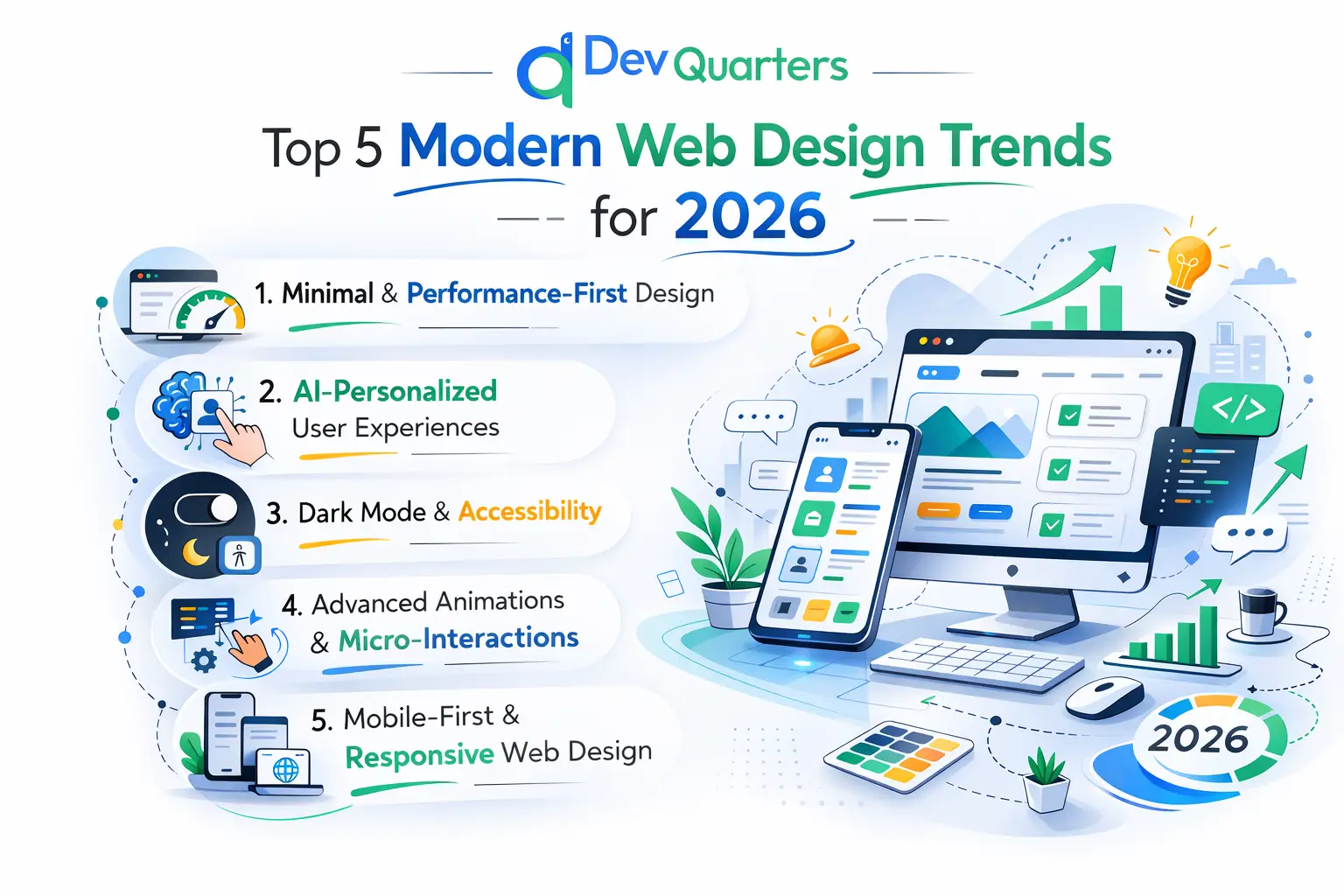
Below are five trends shaping modern web design trends for 2026 and influencing how businesses connect with users.
Minimal and Performance-First Design
Cluttered layouts are fading. In 2026, minimal interfaces dominate because they improve clarity and speed. Users prefer websites that communicate value instantly without overwhelming visuals.
Performance-first thinking means:
- Optimised images and media
- Lightweight frameworks
- Reduced scripts
- Clean typography
This approach enhances loading times and improves overall user satisfaction. Strong modern website design balances white space, content hierarchy, and purposeful visuals.
Minimalism is not about removing creativity—it’s about prioritising function. Among modern web design trends for 2026, speed and clarity consistently outperform visual excess.
AI-Personalized User Experiences
Personalisation has moved from optional to expected. One of the most impactful modern web design trends for 2026 is AI-driven content adaptation.
Websites now adjust dynamically based on:
- User behavior
- Location
- Browsing history
- Device type
These advancements are heavily influenced by evolving UI/UX design trends, where design decisions are informed by real-time data. Personalized product recommendations, adaptive layouts, and contextual messaging increase engagement and conversions.
AI tools analyse patterns and deliver relevant experiences automatically. As part of the future of web design, personalisation creates deeper user connections and higher retention rates.
Dark Mode and Accessibility-Driven Design
Accessibility is no longer a compliance requirement alone—it is a competitive advantage. Dark mode continues to gain popularity, offering visual comfort and reduced eye strain.
However, accessibility extends beyond colour schemes. It includes:
- High-contrast text
- Readable font sizes
- Keyboard navigation
- Screen-reader compatibility
Inclusive design ensures websites serve all users, including those with visual or cognitive challenges. In the context of website design trends 2026, accessibility is central to usability and brand reputation.
Businesses that prioritise inclusive practices align with both ethical standards and user expectations. Modern web design trends for 2026 clearly reflect this shift toward universal access.
Advanced Animations and Micro-Interactions
Motion design has matured significantly. Rather than heavy animations that slow performance, 2026 favours subtle micro-interactions.
Examples include:
- Hover effects
- Button feedback animations
- Scroll-triggered transitions
- Progress indicators
These elements guide users intuitively without overwhelming them. When implemented carefully, motion enhances storytelling and engagement.
The key is balance. Overuse can harm performance and distract users. But when aligned with the broader modern web design trends for 2026, micro-interactions improve user flow and encourage action.
Mobile-First and Responsive Web Design
Mobile traffic continues to dominate. Designing for smaller screens first ensures that essential content and functionality remain accessible.
Responsive web design allows websites to adapt seamlessly across smartphones, tablets, laptops, and desktops. Layout flexibility, scalable images, and fluid grids ensure consistent experiences regardless of device.
In modern web design trends for 2026, mobile-first thinking is not a recommendation—it’s the default. Users expect instant loading, easy navigation, and thumb-friendly interfaces.
Businesses that invest in responsive web design gain improved SEO performance and higher mobile conversion rates.
Common Mistakes When Following Web Design Trends
While staying current is important, blindly copying trends can backfire.
Over-Designing
Adding too many elements in pursuit of innovation often reduces clarity and speed.
Ignoring Usability
Design must support function. If navigation becomes confusing, even visually stunning pages fail.
Trend Chasing Without Strategy
Not every trend fits every brand. Aligning design choices with business goals is essential.
The future of web design lies in thoughtful implementation rather than imitation. Trends should enhance usability and reinforce brand identity—not overshadow them.
Balancing Innovation and Practicality
Modern web design trends for 2026 emphasise user experience, speed, and inclusivity. However, strategic alignment remains critical. Design decisions should reflect audience needs, brand positioning, and measurable objectives.
Businesses that integrate UI/UX design trends thoughtfully create websites that are both innovative and functional. Sustainable design focuses on long-term adaptability rather than temporary visual appeal.
As technology evolves, so will user expectations. Brands prepared to adapt strategically will remain competitive in an increasingly digital marketplace.
Conclusion
The modern web design trends for 2026 highlight a clear shift toward performance-driven, user-focused experiences. Minimal layouts, AI personalisation, accessibility improvements, subtle animations, and mobile-first responsiveness are shaping the digital landscape.
Following modern web design trends for 2026 strategically supports usability, strengthens brand trust, and improves conversion performance. At DevQuarters, we’ve observed that businesses embracing thoughtful innovation consistently build stronger digital presences.
If your website feels outdated or underperforms, it may be time to evaluate how these trends align with your long-term goals. A well-designed site is more than a visual asset—it’s a growth tool built for the future.